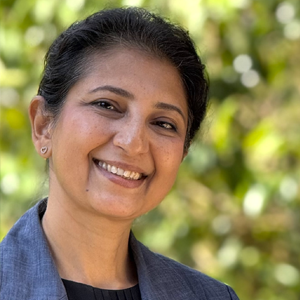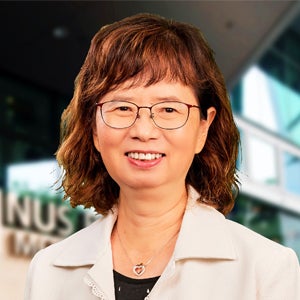
Nurulhuda Mustafa
Department of Pharmacology, Yong Loo Lin School of Medicine (YLLSOM), National University of Singapore (NUS)
Sub-Theme
Building Learning Relationships
Keywords
Relational learning, purpose-driven education, emergent thinking, life science, postgraduate
Category
Lightning Talk
What if postgraduate education wasn’t just a pathway to expertise, but a space for students to discover how they think, connect and contribute?
Postgraduate science education often prioritises technical mastery while overlooking the relational and reflective dimensions that facilitate deeper forms of learner engagement, supporting not just qualification, but subjectification and socialisation (Biesta, 2010). In fast-evolving fields such as biomedical science, students must be prepared not just to absorb content but to navigate complexity and engage relationally—with ideas, peers and real-world context and identify where their contributions can make an impact. We will draw on insights gathered from the pilot implementation of the “Drug Discovery and Development Lifecycle” course. At the heart of this course is a commitment to relational learning:
- Learner to Learner; through discussion, team-based collaboration and peer critique
- Educator to Learner through role-modelling, dialogic facilitation and scaffolding
- Learner to Profession through authentic, industry-based tasks and cases
Rather than treating the curriculum as a conduit for content delivery, the course was grounded in three principles centred on connection: 1. Designing curriculum as a relational space—not simply a content vehicle; 2. Framing assignments as rehearsals for professional contributions; 3. Positioning dialogue and reflection as spaces for meaning-making and emergent thinking. Students were encouraged to think and speak as future contributors, solving real-world problems
These principles shaped the integration of core areas in translational drug development, such as target validation, clinical development and regulatory decision-making, into authentic industry-led case studies and perspectives. Theoretical foundations were interwoven with sector-relevant allowing students to assume professional identities and develop proposals that integrated scientific logic, translational strategy and stakeholder considerations. Learning was scaffolded through educator and peer feedback loops and structured reflections, prompting learners to articulate not only what they thought but why and how they were thinking from specific perspectives.
To evaluate impact, qualitative data were gathered from role-based assignments, peer review, reflective student writing, and post-course feedback. Students consistently adapt sector-relevant language, demonstrated greater comfort with complexity and articulated a clearer sense of their professional roles within the drug discovery pipeline. For example, some began using terms such as ‘lead prioritisation strategy’, or ‘emerging biomarkers’ and made recommendations to ‘identify potential risks throughout the drug development lifecycle, such as safety concerns, regulatory hurdles, or market competition’.
Evidence from formal evaluations strongly supports the effectiveness of this design,
- The course received an average rating of 4.8/5 for overall quality
- Students described the course as one which enhanced their interest in developing a career in drug discovery and praised that the ‘assignment topics were well-aligned’
- Interweaving the curriculum with industry-led sessions broadened and enriched a student’s understanding of drug discovery by giving ‘many different perspectives’ through various speakers.
- Reflections revealed that students valued peer critique. “Discussions and group projects provided a great opportunity to apply what we learned and share perspectives”.
- The educator received a mean rating of 4.9/5 for effectiveness, clarity and ability to enhance student thinking and confidence, with all the students reporting an increased interest in the subject.
From this pilot, three key insights emerge. Firstly, learning relationships can be designed, not left to chance: through purposeful team formation, peer interdependence and dialogic feedback. Secondly, emergent thinking needs structure —students require intellectual and relational scaffolding to productively explore complexity and apply judgement. Thirdly, curriculum can shape professional purpose—when students feel a sense of belonging and find their voice.
This talk invites you to view postgraduate education not merely as knowledge transfer but as a relational space where learners grow through authentic connection with content, community, and contribution.
Reference
Biesta, G. (2010). Good education in an age of measurement: Ethics, politics, democracy. Routledge.